THE LEBANESE CIVIL WAR AND THE TRIPARTITE AGREEMENT.
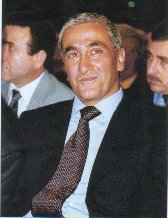
Democracy presupposes civic equality,the equality of all citizens in the eyes of the law. Elie HOBEIKA's main goal in politics can be summarized as: The preferred government must possess the capacity of representing different Lebanese factions and enjoy unwavering moral values and a modern administrative effectiveness. Only such a government is capable of taking the steps needed to rebuild the Lebanese political system and regain the balance in the republic. MR. Elie HOBEIKA is an Unforgettable LEADER and the Tripartite agreement is a great testimony to that effect for ever.
POLITICAL SYSTEMS have their assets and liabilities, and Lebanon is no exception. During the two decades preceding the 1975 civil war, many Western scholars referred to Lebanon as the "most stable democracy" in the Arab world (Shils 1966, 1-12); however, the political system fell far short of being democratic. As Salim al-Hoss asserted, "the system has always had plenty of freedom but suffered from a lack of democracy." (al-Hoss 1984, 217- 219). In other words, democracy was deficient as a system because equal opportunities for citizens as well as political accountability and political responsibility of officials and institutions were lacking. Lebanon had and still maintains a confessional system based on a formula allocating political and administrative functions to the major sects. Such a system has historical roots but it was the National Pact in 1943 that rigidly institutionalized it.
The National Pact was an unwritten agreement between President Bishara al-Khuri and Prime Minister Riad al-Sulh. It involved two major groupings: the political elite of the Maronites representing the Christians in general and the political elite of the Sunnis representing the Muslims. In the National Pact, many issues were settled by the two leaders. First, they agreed to view Lebanon as a neutral, independent and sovereign entity having an Arab character (wajh arabi). Second, they agreed that Lebanon would not seek unity with Syria and the Arab World nor special ties to France in particular or the West in general. In effect, the latter aspect led many observers to label the Pact as the "double negation agreement." Third, the National Pact established a confessional formula providing for the representation of Christians and Muslims in a six to five ratio throughout government. Furthermore, the offices of President, Prime Minister and Speaker of the House were assigned to the Maronite, Sunni and Shia sects respectively (El- Khazen 1991, 5-17; Petran 1987, 33; Owen 1976, 27). This confessional formula of representation, balanced according to the census of 1932, assigned the dominant role to the Maronite sect.
The constitution gave the Maronite president ultimate executive authority while not providing a mechanism for presidential accountability, especially since parliament could question the cabinet, but not the president. Moreover, in addition to the presidency, other key positions in government were held by Maronites. Members of this sect were to occupy major positions in key ministries, in the army and in the courts. Such positions included the commander-in-chief of the army, the highest Judicial position (President of the Court of Cassation), the positions of the Director-General of both internal security and intelligence and that of Governor of the Central Bank.
This particular distribution of power faced challenges in subsequent years because of changes in the internal and regional balance of forces. The general power-balancing approach, however, was reaffirmed, for example in the 1958 crisis, which ended with the slogan "No Victor, No Vanquished" as declared by Saeb Salam, the leader of the opposition at the time (Qubain, 1961). The reforms carried out by President Fouad Shehab (1958-64) and President Charles al-Helou (1964-70) stayed well within the confessional power-balancing framework. Indeed, the application of a new fifty-fifty formula to the distribution of public posts between Christians and Muslims (legislative Decree 112) only reinforced the sectarian nature of the political system.
In the 1970s, various internal tensions inherent to the Lebanese system and multiple regional developments contributed to the breakdown of governmental authority and the outbreak of civil strife in 1975 (Khalidi 1979; Salibi 1976; Petran 1987). The cause of the Lebanese civil war was neither exclusively internal nor exclusively external, nor was its settlement. The civil war came to an end at a specific historical juncture when movement toward internal reconciliation coincided with favorable regional and international developments.
The Taif Agreement (officially, the Document of National Accord) was the document that provided the basis for the ending of the civil war and the return to political normalcy in Lebanon. This paper examines whether the Taif Agreement is a genuine settlement rather than simply a pact; in other words, whether it is a settlement that ensures the final and definitive resolution of the Lebanese conflict.
Settlement relies on negotiation as a means to reaching agreement. The literature on negotiation presents two distinctive theoretical models of negotiation: the static and the developmental. The first model developed out of the literature of game theory and the structural approach. It is mainly concerned with formal bargaining between conflicting parties, in which each party attempts to maximize its gains and minimize its losses (see Hadjipavlon- Trigeoris and Trigeoris 1993). The developmental model considers the process of negotiation as part of a relationship between two parties. Such a relationship starts before their formal bargaining and continues after they reach agreement. The emphasis of the latter model is on relationships and dynamic interactions (the cooperative approach, see Fisher and Brown, 1988).
This paper adopts such an approach to trace the development of the Lebanese conflict. The focus is on the pre- negotiation stage that was necessary to create the political and social changes leading to formal negotiation and the post-agreement stage in which the agreement was implemented. First, the paper analyzes the Lebanese conflict and its development during the civil war of 1975 to 1990. It also explores issues of internal and regional change in an attempt to explain why it took fourteen years to reach an agreement of national reconciliation that could, in theory at least, have been introduced in the very first months of the war. Second, it investigates the nature of political reforms and the essence of the compromise as introduced by the Taif Agreement. Third, it discusses the implementation of the Agreement through an analysis of the structure and performance of the governments that came after the Taif Agreement. Finally, it provides an analysis of the Hariri government as a specific manifestation of a new stage of development in the post-Taif state and discusses the future prospect of the Lebanese political system in relation to internal and regional forces.
Internal and regional background of the TRIPARTITE Agreement, or Tripartite Accords.
The Tripartite Accord (Arabic: الإتفاق الثلاثي) was an agreement between Lebanese feuding factions, the Shiite Amal movement, the Druze Progressive Socialist Party and the Christian Lebanese Forces. It was signed in Damascus, Syria on December 28, 1985, by Nabih Berri, Walid Jumblat, and Elie Hobeika on behalf of the three militias, respectively. The Tripartite Accord was supposed to put an end to the war for good, implement sweeping reforms, and bring about a secular and modern Republic for all citizens of Lebanon, and build a strong national army with close cooperation with Syria.
(For the full text of the agreement see Toksoz 1986, 82-83; see also Sirhal 1990, 131-148.)1985/86: " وعــــد ".
Most of the points agreed upon in these talks found their way into the Taif Agreement of 1989 (Salem 1992a).
Lebanese Civil War Over the next few years as support for the Lebanese Forces declined, and in 1984, Samir Geagea, Karim Pakradouni, and Elie Hobeika forced the resignation of then commander of the Lebanese Forces, Fuad Abu Nader. Fouad Abu Nader was considered too close to Amine Gemayel (he was Gemayel's nephew). Amine, unlike his brother Bachir was disliked by all the LF leaders. Elie Hobeika was named head of the LF after Abou Nader's removal.[2]
On January 15, 1986, Oliver North led a coup, from the American Embassy in Beirut that removed Elie Hobeika from Lebanese Forces command, mainly due to Hobeika's signing the Tripartite Accord (For the full text of the agreement see Toksoz 1986, 82-83; see also Sirhal 1990, 131-148.) with Nabih Berri and Walid Jumblat in full coordination with all forces in Lebanon active politically, including the Maronite Patriarch. Elie Hobeika was besieged in his Qarantina headquarters by Geagea's men (Elias el Murr was trapped with Hobeika in the same building) and was evacuated by Michel Aoun after strong American pressures.... He and his supporters fled to Paris. They returned to Lebanon as a secular LF faction and were stationed in Zahle. In 1990 Hobeika supported the parliamentary faction against Syria in the war initiated by Michel Aoun...
The Lebanese system enjoyed relative stability and an impressive average rate of economic growth during the 1950s and most of the 1960s. Estimates of the rate of growth vary from one study to another, but there is a general agreement that the rate of growth in real terms averaged over seven percent per annum in the 1950s and dropped to an average of five to six percent annually during the 1960s (Makdisi 1977). Lebanon was not yet directly involved in or affected by the Arab-Israeli conflict and it benefited economically from its financial and commercial roles as an intermediary between the Arab hinterland and the international market. However, the Lebanese economy developed as a service-based economy, externally oriented, and dependent on foreign capital. The rapid and lopsided economic growth resulted in uneven social, sectoral, and regional development. In the late 1960s, especially after the 1967 war, internal and regional changes began to adversely affect Lebanon. Internally, socio-political polarization among the Lebanese increased. There was a growing migration of the rural population to Beirut, moving into poverty belts around the city, and suffering from rising inflation and cost of living. Socio-political tensions fueled rural uprisings and workers' strikes, and the emergence of a militant student protest movement (Petran 1983, 130-133; Dubar and Nasr 1982). These socially-oriented movements strengthened class solidarity and introduced class identities that challenged traditional identity patterns based on religion, tribe or region. Indeed, social identity patterns were developing along horizontal class lines, but this development was aborted by the outbreak of the civil war and quick reaffirmation of rigid sectarian divisions and identity patterns (Dubar and Nasr 1982, 106).
The polarization into two broad camps and around two different political programs intensified the political crisis of the system. Kamal Junblatt formed and led a self-proclaimed "democratic, progressive and non-sectarian" front, which later allied itself with the Palestinians. This front grouped several nationalist and leftist political parties and organizations that formed the Lebanese National Movement (LNM) in 1976. The conservative forces led by the predominantly Christian Kata'ib (Phalange) Party formed another block called the Lebanese Front. The LNM advanced a comprehensive political reform plan which called for the total abolition of political confessionalism and the implementation of wide democratic reforms of the political, electoral and administrative systems (Watha'iq 1981, 5-25). The Lebanese Front rejected these reforms and advocated an alternative, although less articulated, plan that varied from maintaining the status quo to political decentralization and federalism (Younis 1985, 33-113). The presence of the Palestinian resistance movement in Lebanon and the support it enjoyed from wide segments of the Lebanese population complicated the conflict further. The vulnerable political system could not withstand the pressure, and internal compromise became harder to achieve.
During the first two years of the war, 1975-1976, the balance of forces favored the LNM and their Palestinian allies. They tried to advance their plan but were unable to impose it, especially after the Syrian military Intervention in 1976. By 1977 the LNM forces were in retreat and their ability to influence political events declined, especially after the assassination of Kamal Junblatt in 1977. Gradually, the LNM abandoned its program of political reform and in 1980 began building bridges with the traditional Islamic leadership. The new program that it developed was based on a preservation of the traditional confessional system but with a redistribution of confessional power to reflect demographic and political changes (Watha'iq 1981, 95-103). During the period of 1976 to 1982, the Lebanese state under President Elias Sarkis undertook various initiatives to find a negotiated settlement to the Lebanese conflict, but none succeeded. Meanwhile, the Lebanese Front was gradually strengthening its position and awaiting favorable regional developments to impose its own will. During this period the LNM was too dependent on the Palestinians and unable to initiate a political negotiation process or participate in providing an effective solution to the civil war.... see this quite extraordinary shifts.....very CIA2 Lebanese...:
http://web.archive.org/web/*/http://www.cedarland.org/walid.htmlThe Israeli invasion of 1982 dealt a staggering blow to the Palestinians and the LNM and dramatically strengthened the Lebanese Front, bringing its militant leader, Bashir Gemayel, to the presidency. Bashir Gemayel was assassinated within days of his election, and his brother, Amin, was hastily elected in his stead. In the wake of the invasion American involvement in Lebanon grew, aimed mainly at brokering a withdrawal agreement between Lebanon and Israel that, it was hoped, would be a precursor to a fuller peace treaty between the two countries. However, by 1984, less than two years after the Kata'ib and President Amin Gemayel's coming to power, the Israeli "new order" in Lebanon had all but collapsed. The Lebanese-Israeli agreement initialed on May 17, 1984, ran into strong opposition from Syria, was not ratified, and was soon abrogated by the Lebanese government; Israel began withdrawing from most Lebanese territories except a border strip in South Lebanon under the control of Israel's surrogate South Lebanon Army (Chomski 1983); the Lebanese government turned away from Israel and the U.S. and opened a dialogue with Syria to find a way out of the impasse. Indeed, by 1985, Syria had regained most of the power over Lebanese affairs that it had lost to the Israelis and Americans in 1982.
On another level, internal battles of that period (in the Mountain and Shouf area [1983], in Beirut [1984], and in East Sidon [1985]) increased the sectarian character of the Lebanese conflict. Confessional segregation reached its peak and the confessionally-based militias ruled the various regions in closed and semi-closed enclaves. In the "Christian areas" the militias spread slogans of a "Christian republic," "Christian security," federalism and partition. In the "Muslim areas," the emerging radical Islamic movements raised the slogans of an Islamic republic.
In 1983, a meeting in Geneva of representatives from the major Lebanese factions for a national dialogue conference achieved little progress. They were able to agree on only one issue, the Arab identity of Lebanon (Younis 1985, 235-346). When these representatives met again in Lausanne in 1984, they were not able to make any further progress. In December of 1985, and with the encouragement and support of the Syrians, representatives of the dominant confessional militias, the Christian Lebanese Forces, the Shiite Amal Movement, and the predominantly Druze Progressive Socialist Party, met in Damascus and reached an agreement, known as the Tripartite Agreement, on political reforms and special relations with Syria-an agreement designed to end the Lebanese conflict. (For the full text of the agreement see Toksoz 1986, 82-83; see also Sirhal 1990, 131-148.) However, in early 1986, President Amin Gemayel and Samir Geagea (intelligence chief of the Lebanese Forces) organized a coup against the Lebanese Forces leader Mr. Elie HOBEIKA. HOBEIKA was ousted from his position as the leader of the Lebanese Forces and the Tripartite Agreement was rendered null and void....
However, today we can say this: For how long, Are we dead-set on being so blind to our Lebanese National Interests ? For how long are we inclined to repeating the same mistakes, over and over again....? For how long are we going to be electing the same politi"CIA"ns over and over again...?
The boldest and most courageous move ever entertained by a Christian Maronite Leader, was taken by Mr. Elie Hobeika in the early part of the odious years of civil wars and wars of the foreigners on Lebanon, the 1980s. This great challenge was done with our heads high and our honor intact as a nation, coming after the tragic experience of the previous 15 years of atrociously violent events, which shook the Republic to its core, jolted the people to entertain the most divisive policies in our history, and pushed hundreds of thousands of our people into immigrating in search for work, studies, and livelihoods for decades.
Democracy presupposes civic equality,the equality of all citizens in the eyes of the law. Elie HOBEIKA's main goal in politics can be summarized as: The preferred government must possess the capacity of representing different Lebanese factions and enjoy unwavering moral values and a modern administrative effectiveness. Only such a government is capable of taking the steps needed to rebuild the Lebanese political system and regain the balance in the republic. MR. Elie HOBEIKA is an Unforgettable LEADER and the Tripartite agreement is a great testimony to that effect for ever.
Mr. Hobeika presented the Lebanese Christians and all Lebanese, with a bold alternative to wars and occupations of our land, and presented a balanced alternative to Taef and its tragic imbalances which we discovered over the years, an alternative which was supposed to be revised and rewritten in parliament prior to its endorsement by the legislature, with a possibility to amend any and all of its articles, a tripartite agreement which preserved and protected the powers of the President of the Republic, while making executive powers more balanced within the same Republic, tending towards a modern form of government for all, with an ultimate aim of eliminating the sectarian formulas all together over time, with a modern civil system of government which would place the right man or woman in the right job, based on merit alone, and a one man one vote form of elections,after giving the millions of Christians living overseas, the right to vote if they so chose...[ In Brazil alone, there are about 8 Million Lebanese Christians who would be eligible to vote in Lebanon, should they chose to do so...] creating real national harmony among all citizens of a great nation: Lebanon.
Unfortunately, some Christians' choice was to fight this democratic alternative to wars, by declaring a real war on the messenger, killing this bold initiative dead in its tracks in January 1986, because these same Christians chose to follow the foreign invader's choice to kill this agreement, I.E., the American administration of Ronald Reagan, despite strenuous efforts by Mr. Hobeika to garner the widest support possible to the Tripartite agreement prior to embarking on this course of action, benefiting from the valuable expertise of the likes of Mr. Khalil Abou-Hamad, Fouad Boutros, and many many more legal experts, diplomats, clergy, the civil society at large, the various factions engaged in battle,and the elites, all of whom endorsed enthusiastically this bold agreement to end the fighting for ever, and embark in meaningful reforms, with a distant aim of eliminating the sectarian formula for good...!
That's why the only way to scuttle this valiant effort was to kill the messenger, demonize the messenger for decades....as they still do today...and push further and further any possibility of real reforms in Lebanon. That's what the puppets and stooges of CIA, Samir Geagea, and Amine Gemayel, with direct operational help from Oliver North...at the US Embassy in Awkar...could do back in 1986...which cannot be done today...hopefully!? because Amine Gemayel, Samir Geagea and Walid Joumblatt are all three, USA's CIA assets still...but the real balance of power of the people has shifted dramatically in favor of reforms, because the constituencies have learned from past mistakes, thanks in large part to Mr. Elie Hobeika's splendid contributions within the body politic, which greatly helps Michel Aoun today, and thanks to a wider access to information...and greater youth participation in politics...and a genuine admiration of the valiant Lebanese Resistance...
The Christian Lebanese would have been well served, had they accepted this bold initiative, acted on it in a positive way, integrated its understandings within the democratic system of Government, the Parliament and the executive branch, it would have spared them and the Nation great sufferings and more turmoil which we embarked upon right after the scuttling of this balanced Tripartite agreement, negotiated by Mr. Hobeika and his advisers in 1985, after being told point blank by all foreign powers during that time of tumultuous wars on our soil, that we should fend for our selves, as Christians and as Lebanese, because the great powers had other urgent matters to attend to... after being thrown out of Beirut by force in 1983 for the multinational forces, and 1985 for the Israeli occupation forces, pushed out of the greater Beirut areas and all the way south to Tyre, by the tremendously successful Resistance of the Lebanese Shi'ite forces, and ultimately out of Lebanon in 2000.
Had the Christians accepted and helped implement the Tripartite Accords of 1985, it would have spared us the tragedy of the 3 years of endless wars between 1986-1989 Aoun - Geagea wars, Geagea - Amine Gemayel's wars on and off, and the great collapse of our economy and our national currency...only to be crushed by the Taef accords, imposed on us by the Saudis and the Americans, with a lot of shameful bribes to all who attended the Taef talks in Taef, under the auspices of the Hariri clan... and we all know what happened next....
This is the lesson which should be taught for generations to come in our universities, schools and public service corridors of the hopefully secular Republic....to come, one day... which Mr. Elie Hobeika wanted wholeheartedly, ever since he embarked on the most difficult Endeavor, ever to be faced by a Politician in our history, having drawn all the conclusions from the war years of endless deadlocked policies, fought by howitzers and 155 MM mortars, 230 MM mortars and Grad missiles in the midst of our cities, towns and Villages over 15 years.... This is where Mr. Hobeika came from, he came from 15 years of sleepless nights... not knowing whether the morning will bring a complete overrun of our Christian areas by force of arms... because the language of Politics, reason and Parliamentary debates had all but ceased to exist.... and something had to be done to get out of this doldrums, hence the bold action of a courageous Leader Mr. Elie Hobeika in 1985, with the Tripartite accords.
This is why it is so important to understand that particular time in our history, the choices we made then..., brought about the demise of a greatly timed initiative, which would have saved lives, treasure and material things, properties.... etc. and spared us from a decade of wars in 86-89 and in 2004-2008....and a 15 years of imbalance in the Republic... because of continuous bickering, occupations and mismanagement to say the least, which added fuel to the fires of the Sectarian bigots, and brought about Aoun, Geagea and Amine Gemayel all over again....and the same stooges on the other side of the isle...still being manipulated by the same powers, hell-bent on divide and conquer policies of the 1900s....all over again.
If we continue to be blind to those factual issues of the 1980s... we will never learn how to be selective in our choice of Leadership, and we will be for ever dominated by the same reproductive system of feudal politicians, sectarian politics and never ending wars every decade or two...? Now, back to the future, with more of the same....? or more of the very same ? until we erase the sectarian system all together from the Republic, we will be doing more and more rewinds every 20 or so years. Is this what the Lebanese really want for their children, and their children's children? Back to Aoun, Geagea, Amine Gemayel, Walid Joumblatt, Nabih Berri, The Hariristan Clan, Saudi Arabia, Syria, Iran, USA, Israel, France, The Vatican, Egypt, and all the rest.... how boring...? are we dead set on being so blind to our Lebanese national Interests ?
Separate visits by two major Lebanese Christian leaders to Iran in the past two months could provide a major indicator of the direction that the wider Lebanese Christian community will take in the future...? I doubt it though...!!!
The first visit was made by General Michel Aoun, the leader of the liberal faction, which adopted a strongly supportive position regarding the Hezbollah-led Lebanese resistance... which is a very good policy, should it translate into a complete overhaul of the sectarian political system for good and for ever....?
The second visitor was the president of the Lebanese republic, Michel Suleiman, who is a traditional CIA Christian Maronite. Despite the fact that he visited Tehran as a president, by visiting Tehran’s military industrial complex and fueling rumors of a possible military purchase, he offered an indication of a breakthrough in Lebanese Maronite culture showing more openness towards other countries in the region....which is fine in of itself, but far from being sufficient if it does not translate into a complete overhaul of the sectarian system for good.
As we must always look to history when we need to understand the present, let me explain two apparently contradictory factors in the history of the Lebanese Christians, in particular the Lebanese Maronites who form the majority of the country’s Christians and who played a major role in the creation of modern Lebanon, particularly during the period of the patriarch Areeda in the First World War...
The first fact is that Lebanese Christians (and the Christians of historical Syria) played a major role in the birth of the Arab national movement, which began in the days of Boutros Al-Bustany and Naseef Al-Yazegi in the 19th century. In this period, they revived and modernized the Arabic language which was the platform on which pan-Arab thinking was based, as well as playing a crucial role in awakening Arabs to the dangers of the Zionist movement as early as the very beginning of Zionism (George Antonius, Najeeb Nasser). The second fact is the skeptical tendency of Lebanese Maronite Christians towards their Arab and Muslim surroundings
Though it is beyond the aim of this article to cast much light on the history of these two factors, one cannot help but point out briefly that both were the product of the Ottoman period. During this era (though varying from period to period) Christians found themselves dealt with as second-class citizens which made some of them look for protection from the Western forces which were ready to help within the framework of Julius Caesar’s famous principle, dividing to influence during the Ottoman period and dividing and ruling in the post-Ottoman period. The Lebanese Maronites’ leading role in reviving Arabism in a secular form arose not only from their early contact with Western culture but was also a self-defense mechanism conceived to contribute towards making a state for all Lebanon’s citizens.
The pan-Arab thinker Constantine Zurich, who came from a Syrian Christian orthodox background, has emphasized the importance of modernizing and democratizing the Arab world, arguing that doing so would reduce the traditional concerns regarding the creation of a state for all its citizens on an equal footing. He summarized this point in asserting that the majority must ensure that the minority feels secure, while the minority must not look outside the country for help and protection.
In the light of this history, General Aoun’s visit to Tehran was important because it represents a new Lebanese Christian approach towards the region, demonstrating that Arab Christians are a fully-integrated part of the Arab Orient and that all Arabs would lose out if Arab Christians were marginalized. However the new Christian outlook proceeds from the Vatican directive issued during the period of the late Pope John Paul II, calling on Lebanese Christians to interact with their surroundings.
Yet while this open attitude is a move towards returning the Lebanese Christians to their historical role as pioneers in Arab progress, a skeptical tendency has reappeared among other Christians in the country. At a meeting held by the Phalange party on its 72nd anniversary, Amine Gemayel, the Lebanese "CIA" President between 1982 and 1988, known as a selfish Maronite puppet of CIA, called for the establishment of federation in Lebanon, an idea which might have surprised many observers less had it come, for instance, from the criminal of the Lebanese forces "proxy CIA Militia" Samir Geagea, who is known to hold a more radical right wing selfish stance.
It is obvious that while the 8th of March Christians have chosen to follow the Vatican’s guidance and resume the liberal traditions of their 19th century forbearers, another faction has chosen to stick with the old-fashioned skepticism which has cost the country’s Christians and the Lebanese generally so much blood and suffering previously, especially during the civil war of 1975-1989, and the 2000-2008.
The question of which group will have the upper hand in the future is difficult to answer. There is increasing evidence, however, that the progressive, open faction is getting stronger, which is good, and fine in of itself, but far from being sufficient if it does not translate into a complete overhaul of the sectarian system for good. This week, General Aoun begins a historic visit to Syria, the country which he declared war against in 1988. Aoun considers his visit to Syria important due to the historical bonds that link the two peoples; Saint Maron, the founder of the Maronite sect, was, after all, a Syrian whose followers moved to the mountains of Lebanon. During his visit, General Aoun is scheduled to meet with members of the Maronite and other Christian communities in Aleppo and Damascus, meaning in the view of some in the Lebanese media that he is behaving as if he were the leader of the Arab Orient’s Christians. He has denied this, but did not conceal his concern for the Christians across the region as being an integral part of it, rather than connected to “the crusaders or the French in the region,” in his own words.
It is certain that this argument is highly unlikely to convince those politicians who are still prisoners of the past and thus unable to search sincerely for a better political formula to resolve Syrian-Lebanese relations. Indeed, criticism of Aoun’s Syrian visit came quickly from the 14th of March Christians who still hold the same old hostile position towards Syria. What will Lebanese Christians’ choices be...?
However, apart from the daily politics and amid the talk about a dialogue between cultures the Lebanese and the Arab Christians, as the previous Phalange Party skunk of CIA Karim Bakradouni said, can play an important role in creating real dialogue between the East and the West....
Yet this cannot happen without the adoption of a stronger Arab and Muslim position in condemning the murders of Iraqi Christians and without providing the Arab Christians with all the support needed to help them assuming their illuminating role in the Arab Orient. A strongly supportive Arab position would certainly weaken the skeptical voices among some Lebanese Christians who still believe that their security comes from outside the region...., because that's what they are told by their CIA/MOSSAD patrons and handlers....exactly as they were told in 1985-86 when they scuttled the Tripartite accords, negotiated brilliantly by Mr. Elie Hobeika, and timed valiantly to take advantage of a moment in History...when that is possible for a courageous Leader to make a brilliant choice for his nation...., but that was not to be , because no hand can clap on its own...., and when "Betrayals" are the norm for the puppets...who say one thing during daytime...only to renege and fight to the death at night... killing hundreds of innocent young men on barren walls from your co- religionists...with the blessing of Nasrallah Sfeir. Although the Lebanese Christians’ choice is first and foremost the responsibility of their constituencies, it is also crucially related to the availability of greater choice in the region; more democracy and more progress towards creating a secular state for all citizens would no doubt empower Lebanese Christians, who view themselves as Arabs who would defend the Arab causes, with a modern secular form of government being foremost among these.
A state of political paralysis prevailed in Lebanon between 1986 and the end of President Gemayel's term on September 23, 1988. In fact, Prime Minister Rashid Karami and the cabinet boycotted the President. Karami tendered his resignation as Prime Minister but soon thereafter, on June 1, 1987, was assassinated. Yet, the cabinet continued to function with Salim al-Hoss as acting Prime Minister. Meanwhile, the Lebanese and Syrian governments pursued talks to find an alternative to the Tripartite Agreement. The talks became deadlocked after the assassination of Karami, but not before agreement on the broad outlines of political reform, relations between Lebanon and Syria, and the position vis-à-vis the Israeli occupation of South Lebanon. Most of the points agreed upon in these talks found their way into the Taif Agreement of 1989 (Salem 1992a).
At the end of Gemayel's term, in September 1988, the failure to elect a new president led to a political vacuum which threatened to lead to partition. Gemayel appointed an interim cabinet headed by Army commander Michel Aoun, but this cabinet's authority was only accepted in the predominantly Christian areas; in West Beirut and other regions of the country, the original cabinet headed by Salim al-Hoss was regarded as the legitimate one. Executive authority was thus split between the military government of Aoun and the civilian government of Hoss. The two governments stood against each other and each claimed exclusive legitimacy. The legislative authority also experienced a vacuum because the parliament failed to renew the oneyear term of the speaker or to elect a new one.
The development of a faction within the military establishment which was supported by some social and political forces and which had much popular appeal, intensified the crisis. In fact, when this faction, represented by General Aoun, reached power, it was already convinced that the solution should come through the military authority (Awn 1988). General Aoun exploited the popular mood which was against the militia order and against the traditional political establishment that was considered largely responsible for the disintegration of Lebanon. Moreover, Aoun placed much emphasis on national sentiments, especially on the issues of independence and sovereignty of Lebanon. Wide segments among the youth and the general population moved in support of such slogans and the themes behind them (Pakradouni 1991, 187-229; Dagher 1992; Naoum 1992; Salem 1991).
On March 14, 1989, Aoun and the Lebanese army troops under his command began a self-declared "War of Liberation" ostensibly against all foreign forces; in reality the effort was directed exclusively against the Syrians. This war had devastating consequences; instead of curtailing the Syrian presence in Lebanon, it caused an increase in their numbers from around thirty to forty thousand. Moreover, the areas under General's Aoun's authority were besieged and devastated by the battles, and a massive emigration of the inhabitants of these areas took place.
On January 30, 1990, another war broke out, this time between Aoun's troops and the Lebanese Forces militia, now led by Samir Geagea. This inter-Maronite war was militarily indecisive, yet politically decisive because it eroded the two capacities of both forces, singly or together, to effectively reject or alter the political compromise, represented by the Taif Agreement, that had been reached and that was in the process of implementation (Laurent 1991). On the other hand, an inter-Shia war took place between the two major Shiite forces: Amal and Hizbullah. These destructive battles raged in South Lebanon and the southern suburbs of Beirut. Indeed, the Maronites and the Shia, the largest confessional communities in Lebanon, were also the most intensely affected by intra-confessional clashes.
As a reaction to the devastation of the War of Liberation and the intra-confessional battles mentioned above, public intolerance for the continuation of the civil war and support for a quick settlement grew rapidly. Indeed, during the years of civil war there had been many indications that the majority of ordinary citizens and many social, cultural, and popular organizations were against the separation of citizens, regions and cities. They expressed their desire for unity many times, confronting the militias, as they did for example during massive labor-organized demonstrations in 1987 along the Green Line. The marginalization of the militias and the rebuilding of the Lebanese state was viewed as the only rational way out of the civil war system. There was also general acceptance that none of the warring factions could decisively win the war, and that there was no alternative to a new compromise ensuring the continuity of Lebanon as an entity having a united central political system.
These internal changes coincided with developments on the regional and international levels that also favored a political settlement in Lebanon. The Lebanese conflict had always been linked in significant ways to the Arab- Israeli conflict. The various Lebanese factions had, repeatedly, attempted to exploit their associations with one or another of the conflicting regional parties to promote their own internal interests. Such associations complicated and prolonged the civil war. Indeed, the polarization among the Lebanese and their efforts to defend or promote their Interests invited and facilitated external intervention. However, if it was necessary to settle the internal dispute in order to decrease the role of external forces, it was also necessary to have their tacit acceptance or to minimize their capabilities to oppose a settlement in order for such a settlement to succeed. In 1989 such conditions were available.
Israel had already lost interest in Lebanon after 1984-85 and was preoccupied with the rising Palestinian intifada which had erupted in December, 1987, in the occupied territories of the West Bank and Gaza Strip. As for the Palestinians in Lebanon, the exodus of Palestinian troops from Beirut in August of 1982 dramatically weakened their influence. Later developments between 1983 and 1988 (battles between Syrian and Palestinian troops in the north, battles between Amal and the Palestinians in Beirut, and various intra-Palestinian fights) contributed further to the weakening of the Palestinians in Lebanon. The remaining Palestinian armed forces were isolated in a few refugee camps of South Lebanon.
In contrast to the Israelis and the Palestinians, Syrian influence in Lebanon increased steadily. Syrian influence in Lebanon had always been considerable, but the military intervention of 1976 gave it a solid material footing (Chalala 1985). In the Civil War, Syria initially supported the LNM and their Palestinian allies until the Spring of 1976 when it became evident that the balance of forces was tipping dramatically in the latter's favor. On June 1, 1976, Syrian troops entered Lebanon (upon an invitation by the President and the Lebanese Front) and supported the Lebanese Front in holding back LNM and Palestinian armed forces. In October 1976, two Arab summits held in Cairo and Riyadh endorsed the Syrian intervention. They established an Arab Deterrent Force, the majority of which was composed of Syrians. In 1978, the Lebanese Front forced the Syrian troops to evacuate its areas (East Beirut and adjoining regions to the north) after a military confrontation with them. In 1982, Syrian troops were also forced by the Israelis to evacuate West Beirut along with the Palestinian troops. However, within a few years, Syria was able to regain its influence in Lebanon. In 1987, Syrian troops reentered West Beirut as well as various regions of the Mountain, the Shouf and the southern suburbs of Beirut. In 1990, Syrian troops reentered East Beirut and other predominantly Christian areas that they had been forced out of in 1978.
Part of this re-expansion of Syrian power was with Arab and Western acquiescence. This acquiescence was partly to avoid inter-Arab conflicts and partly to curry Syrian favor in the Persian Gulf and the Arab-Israeli peace process. In 1989, Iraq, free from the pressure of the war with Iran, intervened in support of General Aoun and the Lebanese Forces and against Syria. This could have led to an escalating regional conflict between Iraq and Syria; therefore, the Arab states, led by Saudi Arabia, held a summit meeting in Casablanca and formed a Tripartite Committee composed of King Fahd of Saudi Arabia, King Hassan of Morocco, and President Shadli Ben Jedid of Algeria to deal with the Lebanese crisis.
The Arab iniative in the Lebanese conflict was not only a way to minimize the threat of regional escalation, but was also interpreted by some as an attempt by the Gulf states, especially Saudi Arabia, to counterbalance Syrian influence in Lebanon with a little bit of its own influence. Although the Syrians consolidated their influence over Lebanon, especially after the Gulf War, some observers interpreted the coming of the Lebanese-Saudi businessman Rafiq al-Hariri to power in 1992 as a sign of a renewed Saudi role in Lebanon.
The U.S. was interested in curtailing the crisis in Lebanon so as not to derail the Arab-Israeli peace process. After the development of the Gulf crisis in 1990, the U.S. had the added concern of containing Iraq and gaining Syrian support for the Gulf war coalition. The end of the Cold War and the break up of the Soviet Union strengthened American influence in the region and allowed it to pursue its policy objectives with fewer :global obstacles. The U.S. supported the Taif negotiations and lent its support both in Arab circles and vis-à-vis Syria toward the successful completion of those talks.
Under the above mentioned circumstances, sixty-two Lebanese deputies (those still alive of the ninety-nine originally elected in 1972) met in the city of Taif in Saudi Arabia to discuss national reconciliation on the basis of a document that had already largely been prepared by the Arab Tripartite Committee after much consultation with Syria, the United States and various Lebanese leaders. The deputies, after twentytwo days of discussion and consultation with officials and leaders in Lebanon, reached agreement on October 22, 1989. The National Accord Document, or the Taif Agreement as it came to be known, constituted the outcome of a process of reconciliation among the Lebanese, with the effective support of the Syrians, the Arabs, and the international community. In a statement following a summit meeting in Malta, the USA and the USSR expressed the international community's support for the Agreement. In addition, the United Nations Security Council Declaration on October 31, 1989 supported the agreement and the Lebanese authority resulting from it. (For the full text, see Salman 1990.)
The Taief Agreement .The Taief Agreement constituted a compromise among the Lebanese deputies, political groups and parties, militias and leaders. It tackled many essential points pertaining to the structure of the political system and to the sovereignty of the Lebanese state. Indeed, these two issues are interrelated. The mechanism for regaining state sovereignty was preceded by an affirmation of the identity and unity of Lebanon. It was also preceded by internal political, administrative and other reforms. The essence of this compromise was in accepting the Taif Agreement as a package deal. It constituted the right formula to end the war internally; however, it required the acceptance of incomplete sovereignty over a considerable period of time (Norton 1991, 466). The Lebanese could not wait any longer for the regional conflict to be resolved; at the same time, they could not totally separate the internal aspects of the conflict from its regional dimensions. Consequently, the best solution was to preserve Lebanon as an entity and to introduce a new political and practical formula that would stop the war. This formula would also allow the Lebanese to regain a minimal degree of stability in order to rebuild their institutions, resuscitate their economy, and reinforce their capacity to face changing regional and international conditions.
Any agreement or compromise is a synthesis of conflicting interests and ideas. As such, on one level, the Taif Agreement constituted an effective deal that provided the basic mechanism for ending the civil war. However, at another level, the Agreement is, perhaps, not the best arrangement for launching the process of rebuilding a more stable political system in Lebanon. The distinction between these two levels is highly significant and sheds new light on the nature of the Taif Agreement. In effect, the Taif Agreement emerges as a process rather than a final and inflexible settlement. Since the Agreement embodies an unstable and contradictory formula, one must realize that preserving It in its initial form would lead to further conflict in the future. Therefore, there is a need "for a creative interpretation of the basic document making the formula flexible enough to permit its own transformation." (Salameh 1991).
Moreover, it is necessary to distinguish among the issues that the Agreement resolved decisively and those about which it was less precise and decisive. For instance, the Agreement was decisive in determining the Arab identity of Lebanon, emphasizing that Lebanon was an independent, sovereign, free country and a "final homeland" for all Lebanese. Second, it confirmed the unity of Lebanon. Third, it defined the nation's political system as a parliamentary democracy, based on the principles of separation, balance, and cooperation among the various branches of government. Fourth, it clearly defined the socio-economic system as a free economy favoring individual initiative and the right to private property. However, it also emphasized the necessity for balanced and even development in all the regions to insure a form of social equity. Fifth, it stated that the abolition of political sectarianism constitutes a basic national goal to be achieved according to a gradual scheme.
The Agreement left two sets of issues open to future discussion. The first set concerns the process of re- establishment of complete sovereignty in Lebanon. This issue is related to the resolution of the regional conflict through the peace negotiations between Israel on the one hand and Syria and Lebanon on the other hand. Lebanon joined the Madrid Peace Conference and later the bilateral negotiations with Israel. Although Lebanon is not directly concerned with Security Council Resolutions 242 and 338, since Lebanon did not participate in the 1967 and 1973 wars nor did it lose territory during those conflicts, Lebanon is concerned with Resolution 425 which followed the 1978 Israeli invasion of South Lebanon. This resolution states that Israel should withdraw fully and unconditionally from Lebanese territories. Since Lebanon joined the process of negotiation, Israel has rejected any discussion of Resolution 425. The Israeli refusal to withdraw postponed a Syrian troop redeployment which had been written into the Taif Agreement; in other words, at least part of the implementation of the Taif Agreement is linked to Israeli actions in the south and a comprehensive settlement in the region.
The second set of issues is relevant to the nature of the internal political reforms and their implementation. The Taif Agreement introduced thirty-one important constitutional amendments which were approved by the Lebanese Parliament on August 21, 1990, and signed into law by President Elias al-Hraoui on September 21, 1990. The reforms did not fundamentally alter the political structure, which is still predicated on political sectarianism. The Taif Agreement cc Implicitly ratifies the National Pact of 1943 and emphasizes confessional compromise and inter communal cooperation." (Norton 1991, 461). The changes aimed at creating a new and more equitable confessional formula (i.e., one that distributes power fairly among all confessional communities), but although the Agreement stated that the abolition of confessionalism was a national goal, no specific deadline or time table was provided for its actualization (an-Nahar 1992).
Confessional balance and confessional representation predominate in the new constitution; moreover, confessionalism is reproduced and further institutionalized. It is worth noting here that, since 1943, political confessionalism has been considered as a temporary arrangement that should be expunged as soon as possible, but it has continued to predominate. In Lebanon, transforming the provisional decisions into permanent ones has become a tradition, reaffirmed most recently with the Taif Agreement. The error committed in the preservation of the inadequate 1943 National Pact might be repeated with the Taif Agreement. Such a position contradicts the establishment of a strong political system that "provides for legal and peaceful ways for its own amendment, for its adjustments to changes in society" (Salameh 1991, 57). The political reforms proposed by the Taif Agreement were marked by a strong contradiction evident in the gap between sectarian thought or philosophy and the democratic aspiration for a modern, secular, non-confessional, and stable political system in Lebanon. The new confessional formula was based on reducing the prerogatives of the President of the Republic and transferring the executive authority to the Council of Ministers as a collegial body. According to Article 17 of the amended constitution, "Executive power shall be entrusted to the Council of Ministers, and the Council shall exercise it in accordance with conditions laid down in this constitution." The original article stated that "Executive power shall be entrusted to the President of the Republic who shall exercise it assisted by the Ministers in accordance with conditions laid down in this constitution."
The intention of this agreement was to eradicate the dominant position of the Maronites as it was ensured by the old formula and to allow for equitable participation of Christians and Muslims in the Cabinet. This parity may also be observed in the system of distribution of seats in Parliament and in Grade One posts, and their equivalents in public service Jobs. The post of President, traditionally assigned to a Maronite, provided him with power as the head of state and the symbol of its unity. The president was also considered as the custodian of the country's unity, independence, territorial integrity and constitution.
The position of Prime Minister, a traditionally Sunni post, as the President of the Council of Ministers, was strengthened; similarly, the power of the ministers as members of the Council increased. The Prime Minister presides over the Council of Ministers; he is to be nominated by the President who conducts mandatory parliamentary consultations and shares the results with the Speaker of Parliament,
In Parliament, the position of the Speaker, a traditionally Shia post, has gained importance because the Speaker's term of office was extended to four years. In addition, Parliament has been reinforced because the number and type of cases under which the executive authority can dissolve it were set out and were limited to three rare ones (al-Hoss 1992, 9-11; Norton 1991, 462-465; Mansour 1993, 79-92; Mallat 1990, 10-17; Khalil 1992, 161-218, 433-450).
Due to these constitutional amendments, one may say that the political system in Lebanon has become more parliamentary although the continuation of some of the prerogatives of the president means a continuation of a semi- presidential system.
Many of the reforms agreed upon in the Taif Agreement had been mentioned in previous documents, such as the Constitutional Document accepted by then-President Franjiyyeh in 1976, proposals presented in 1983 in Geneva and in 1984 in Lausanne, the national unity governmental declaration of Prime Minister Karami in 1984, and the Tripartite Agreement in 1985. Those reforms were also discussed between Syria and President Gemayel in 1987-88, and the meetings between Syrian officials and the American Ambassador April Glaspi and special American envoy Richard Murphy in 1987-88. Moreover, the agreement signed in Taif is not radically different from the National Pact of 1943 if one considers the essence of the compromise in both pacts. In many ways, "the main hallmarks of pre- war Lebanon have been retained in a milder and more palatable form." (Mallat 1990, 17). The National Pact was transformed from a kind of common law or oral agreement into a formal constitutionally written document. The philosophy of confessional representation, reconciliation and understanding between the different confessional "communities" remained the same. In this way, the National Accord Agreement may be seen as a "developed form of the National Pact and it does not cancel it but adds to it." (Salem 1992b). In fact, as Kamal Salibi has stated, "there are no major differences in essence between the National Pact of 1943 and Taif " Moreover, "the philosophy behind the Taif Agreement and the way it was achieved was Lebanese. It was a Lebanese formula similar to the formula that was born in 1943." (Salibi 1992).
At another level, this new distribution of power was an expression of a balanced confessional formula and, as mentioned earlier, the elimination of confessionalism was relegated to a rather distant future. In the transitional phase, and according to Article 95 of the Lebanese Constitution, confessional parity is to predominate. just like the old formula of 1943, this confessional formula leaves the door open to the renewal of conflict, and increases the possibilities of its occurrence. Such a situation does not allow for the revival of a stable political system, one that is urgently needed to fulfill such very essential tasks as the reconstruction of the country's infrastructure, the revitalization of the economy, and the rebuilding and development of public and private institutions. Other important tasks have not been fulfilled and Lebanon till the present day has not regained its full sovereignty, witnessed the return of the displaced or the outcome of the negotiation process.
The post-Taief state and implementation of the Agreement.More than five years after signing the Taif Agreement, many improvements have been realized. The war has ended, and most Lebanese, except for one part of the southern population, have enjoyed a long forgotten peace since late 1990. State institutions have reestablished their authority, the army is united and gaining strength, and the deterioration in economic conditions has stopped, although a lot has to be done to face a serious financial deficit and economic stagnation. However, the Taif Agreement was and is still being implemented within a different balance of internal forces as well as a different balance of regional, Arab forces, than originally intended. This is reflected through the increase of Syrian influence and a lack of balanced internal representation in Parliament because of the "Christian" decision to boycott the elections held in the summer of 1992. This imbalance has led some of those who participated in and supported the agreement to join the opposition and declare that what is being implemented is not the Taif Agreement (Mansour 1993, 8).
In the first two years of the implementation of the Agreement, it was obvious that the Lebanese agreed on the necessity of state revival, but they disagreed on the model that they should adopt. Did it have to be the traditional liberal model which existed before the war, the Shehabist strong-state model, or a new model that would provide for both a sharing and concentration of power? (Hudson 1988).
The Agreement resulted in a reproduction of the Lebanese confessional state under a new formula. Sectarian balance and sectarian participation replaced one-sect hegemony, thus power became distributed centrally.
At the state level, the Agreement produced a three-man show or "troika" consisting of the three Presidents: the President of the Republic, that of the Council of Ministers, and that of the Parliament. In practice, the understanding among these three presidents as individuals has come to mean that the three institutions, qua institutions, have paled in importance. This contradicts the fundamental purpose of the Agreement which was to replace the rule of the individual (the President) by the rule of the institutions. Furthermore, many different interpretations of the way to implement the Agreement have emerged. These differences result from the attempt of each President, as a representative of his confessional community, to enhance his position and his prerogatives (al-Hoss 1991, 152-166). Moreover, the insistence of the President of the Republic to exercise many of the prerogatives that the Agreement has already canceled represents an attempt to maintain some common unwritten practices in order to revitalize the old, pre-war system, thus curtailing the intent of the Taif Agreement through different practice (Mansour 1993, 199- 219). For instance, one may mention the insistence of the President of the Republic on attending, and thus presiding, over every meeting of the Council of Ministers in order to assert that he still has control over the executive power.
Yet, the most alarming consequence of the implementation of the Agreement has been the intensification of confessional conflicts and divisions leading to the paralysis of the political and administrative authorities. The disagreement on the appointment of the Grade One public posts has been an indication of such conflict. Wien some of these appointments were declared, they reflected a confessional distribution based on compromises that were based on neither competence nor expertise.
The Taif state has not yet been able to establish a clear and relatively stable formula to rule, govern, and exercise authority. In addition to the previously mentioned problems, one can note the lack of new socio-political forces and leadership that can implement the Agreement fully, leading the nation towards a more democratic system.
The Lebanese state in the post-Taif era has been arbitrarily controlled by contradictory and conflicting socio- political forces. On the one hand, the militias that were dominant during the war years were invited and encouraged to participate in the political reformation process because they were considered to be representative of a reality that needs to be acknowledged first and gradually changed later. On the other hand, new socio-political forces foreign to the war forces came into power; they represent the economic power of local capital allied with regional capital, with important support from the rich and conservative Gulf states as well as that of European and American states. At the same time, the influence of the traditional confessional leaders greatly diminished during the war years, and this process continued in the Taif state.
This new socio-political coalition does not have an agreed upon secular program because it includes contradictory visions and interests. Moreover, the role of the traditional bourgeoisie who is relatively tied to the national market and to the local social structure has been losing its importance as new elements who are externally oriented at the financial and commercial levels, and who are tied more to regional and international economic projects and interests, have been gaining power and control over the Lebanese market.
The coming of Rafik al-Hariri to power as a prime minister in October 1992 reflected such developments. The changes in the Lebanese system cannot be considered as due exclusively to changes of leaders. Moreover, exaggerating the role of the individual does not help to understand the Lebanese situation fully, nor its effects upon Lebanon's internal and external relations (Marlow 1993). In fact, an analysis of the new qualitative stage of development in the Taif state is necessary for the understanding of the current situation in Lebanon.
The Hariri phenomenon ...The Hariri phenomenon took place in the context of particular regional and internal developments. Regionally, it came about in the aftermath of the Gulf war and the launching of the Madrid Peace Conference. The American administration acknowledged the Syrian role; in return the Syrian regime adapted itself to the new conditions and accommodated the interests of others, especially those of the Americans and the Gulf states in Lebanon. Internally, the social base of the old system was already weak, if not destroyed, and there was an urgent need to restructure a new one. Therefore, the Hariri government introduced representatives of the new segments of the bourgeoisie who were foreign to the political process, most of whom had lived outside the country during the war years. Significantly, these persons came into power with their own program of reconstruction and development. This program was independent of the internal traditional and sectarian militia forces, but was subservient to regional and international ones.
This new socio-political coalition is based on these segments of the big bourgeoisie controlling internal financial and economic systems. These systems have become more centralized, and are concentrated under a small group headed by Rafik al-Hariri himself This coalition was politically supported by both the militia forces and some of the neo-traditional forces. The internal compromise between these two factions, and the compromise between the Syrians and a sort of balancing Gulf influence headed by Saudi Arabia, supported by the U.S., has produced an unstable, inconsistent, and somewhat conflict-ridden ruling formula.
The militia forces in power have based their own political practice on their experience of the war years. This experience is characterized essentially by the use, exploitation and division of the available resources of the state. At the same time, these forces frequently resorted to traditional mobilization methods reflecting the sectarian political culture.
The Hariri faction once in power could not establish a different political culture nor produce a clear, definitive political program. Moreover, the Hariri government seems unwilling to fulfill its duties, especially the political ones, whether they concern the peace negotiation process or the return of the displaced.
Many government actions have been conflictual; however, such a state was especially true of the administrative "reform" that turned out to be an ill-planned administrative purging. Instead of modernizing and reforming the existing administration, the government kept it intact and established at the apex a parallel one tied to the Prime Minister. Even the cabinet is divided in two. The first part represents Hariri, and controls the ministries of finance, the economy, and the essential services; the second is a political one grouping the militias and a number of Syrian-tied or traditional politicians.
This arrangement is a compromise that is reproduced in other institutions of the state. Such a situation may perhaps be viewed as the result of the lack of capable social forces able to transcend the politics of confessional power-sharing to build a national and non-sectarian identity.
Moreover, if we examine the opinions expressed by Rafik alHariri, it seems that he is not interested in reforming the existing system. When he was asked about this matter he answered that "there was no need for political reform because reform has already taken place. What we need is an election. The election will give a new leadership to the country." (Matthews 1993).
As for the differences or conflicts with the President of the Republic and the Speaker of the Parliament, Hariri thinks that it is a matter of "different personal moods and what is existing is the best possible system; what is needed is better coordination and more hardworking efforts. Any other system, other than the troika, will create problems that we can not foresee."
At the economic policy level the government has a clearer vision that is best reflected through the ten-year development plan, a plan that was articulated by the International Bechtel Co. and the Lebanese Dar al-Handasa as requested by the Council of Development and Reconstruction (CDR). The plan is divided into three phases: rehabilitation, recovery, and development. The first stage will take three years, the second five years, and the third two years. The total cost of the plan is around $11.5 billion. The distribution of these costs over sectors reflects a heavy emphasis on infrastructure and services, and a relative neglect of the productive sector and social projects. In effect, 41 percent of these costs are assigned to infrastructure, 24 percent to socio-economic projects such as public transportation, water resources and railroads, and 27 percent to social projects, such as education, health, housing and social affairs; however, this 27 percent will be mostly spent on ensuring the reconstruction of buildings and providing compensation to the displaced. Finally, only 8 percent will be assigned to economic projects in the productive sectors of agriculture and industry (Issa 1993; an-Nahar 1994). The CDR is responsible for formulating the overall planning and for securing financing for the implementation of these projects. The CDR acts on behalf of the Council of Ministers and reports directly to the Prime Minister. This plan is highly dependent on foreign loans and has a propensity to overspend on luxury projects. Moreover, it lacks any ranking of priorities.
Recent experience has shown that the capacity to administer and manage such projects under the current administration is less than impressive. A recent report of the Bureau of Accounting stated that more than 58 percent of the contracts awarded were consensual between the contractors and the various ministries (As-Safir 1994). In addition, a lot of criticism has been directed against the Solidère Company and the governmental plan to reconstruct the commercial center of Beirut (Beyhun et al. 1992).
However, the most alarming fact is the existence of many institutions that act independently of any auditing or review by either government or parliament. What is more important is their way of spending large amounts of funds and their political implications. These institutions are: the CDR which reports only to the Prime Minister, the Council of South Lebanon which is tied to the Speaker of the Parliament Nabih Berri, the Fund for the Return of the Displaced and Refugees, which is tied to the Minister of the Refugees Walid Junblatt, and the Higher Commission for Relief which is also tied to the Prime Minister. The ways in which such institutions manipulate their funds suggests that some sort of distribution of benefits is taking place. The Prime Minister controls the basic financial and economic decision-making processes through his control of the CDR, the Central Bank, and the finance Ministry. In turn, the old militia forces control other resources and play an important political role in the cabinet and the parliament.
Despite its shortcomings, the Hariri government is seriously engaged in the process of reconstruction. Moreover, many of the future regional developments will certainly affect the position, function, and role of the Lebanese state. The question remains as to whether Lebanese society will be able to protect itself from negative developments and benefit from positive ones..... However, after the departure of Mr. Hariri in February 2005, assassinated by Asef Shawkat of Syria's military Intelligence, and the White House Murder Inc,
http://newhk.blogspot.com/2008/12/uniiic-ii-report-revisited.html ; it can be said without any hesitation that Mr. Rafic Hariri made Billions illegaly in Lebanon. He came to power in Lebanon with a net worth of about 3 Billion USD, and after his death he was worth more than 17 Billion USD...., and all the facts remain that his policies brought about a lot of misery for the Lebanese, because of his megalomaniac tendencies for sure. After his demise, the actual King of Saudi Arabia King Abdallah Ibn Saud, tried to use the turmoil in Lebanon, after the summer 2006 war of agression on Lebanon by Israel and USA and the clan of ARAB puppets of CIA/MOSSAD, Egypt, Jordan and Saudi Arabia on the valiant Lebanese Resistance of Hizbullah, in order to bring about a complete change in the nature of LEBANON.... KING Abdallah tried to influence the USA and France into accepting a MOSLEM President in Lebanon, following the debacle of Emile Lahoud.... but thankfully no one followed King Abdallah in his odious designs.... thanks to the valiant Lebanese Resistance to cocupations, wars and hegemonic designs of the PNAC KILLERS of CIA2/MOSSAD/DGSE/MI6 and the UKUSA alliance of evils.
In either of the two above-mentioned cases, it is necessary to solidify national unity and to transcend the conflicting political confessional formula into a more stable and secular democratic one for sure as soon as possible, and today before tomorrow, because if we do not do that soon, war will ensue for sure, as night and day.
Conclusion.Democracy presupposes civic equality,the equality of all citizens in the eyes of the law. Elie HOBEIKA's main goal in politics can be summarized as: The preferred government must possess the capacity of representing different Lebanese factions and enjoy unwavering moral values and a modern administrative effectiveness. Only such a government is capable of taking the steps needed to rebuild the Lebanese political system and regain the balance in the republic. MR. Elie HOBEIKA is an Unforgettable LEADER and the Tripartite agreement is a great testimony to that effect for ever.
The Taief Agreement constitutes a step forward, but does not yet provide the basis for a more stable and democratic system in Lebanon. In fact, the civil war experience showed that the modern state cannot be built on the basis of sectarian identities. There is a need to transcend such an identity and to establish a clear conception of the national identity. Unless such a state is achieved, the Lebanese might not be able to develop or maintain this Agreement and the dangerous options of partition, disintegration, and war remain possible. As McLaurin puts it "any new national pact that does not reflect the Lebanese consensus and does not respond to Lebanese requirements will survive only as long as the guns to impose and enforce it remain in current alignment." (McLaurin 1989, 27). Moreover, the survival, development, and stability of the Lebanese system "depend on whether the Lebanese republic can break with its history to become truly a commonwealth involving citizens rather than community rights." (Salibi 1988, 12). The dilemma of the post-Taif state results from the fact that a national and non-sectarian form of representation cannot be carried out by sectarian forces, within a sectarian structure, and under a system which is based on a confessional power sharing formula. Such change needs new forces and a different political and civic culture.
It would be interesting to compare the Shehabist regime with the Hariri government. In fact, Shehabism attempted to carry out a major reform but failed, in spite of the existence of the instrument needed for such a reform, i.e., the Army, and despite the availability of important social support provided by many social elements headed by the middle class. In comparison, the Hariri government has not been able so far to organize and establish a social base of support or find the instrument upon which it can rely to initiate the process of reform.
Finally, the achievement of such a task needs perhaps the existence of a different vision, different political forces, a different notion of politics, and a new generation. It is a process based on a continuous struggle between the forces of change and those of tradition. Meanwhile, the Lebanese system continues to suffer from the inadequacies of the Taif Agreement. In such a context, one may say that while the old Lebanese system is dying, the new one is not yet able to establish itself.
--------------------------------------------------------------------------------
Works Cited :
Awn, F. 1988. Wa Yabqa al-jaysh Huwa al-Hal [And the Army Remains the Solution]. Beirut: n.p.
Beyhum, N. et al. 1992. The Reconstruction of Beirut and the Lost Chance: Beirut's Commercial Center and Solidère. Beirut: n.p.
Chalala, E. 1985. Syrian Policy in Lebanon, 1976-1984: Moderate goals and pragmatic means.journal of Arab Affairs 4, No. 1 (Spring): 67-87.
Chomski, N. 1983. The Fateful Triangle: The United States, Israel and the Palestinians. Boston: Southend Press.
Dagher, C. 1992. Jeneral wa Rihan [A General and a Wager]. Beirut: FMA.
Dubar, C. and Nasr, S. 1982. al-Tabakat al-Ijtimai'a Fi Lubnan [Social Classes in Lebanon]. Beirut: Arab Research Institute.
Fisher, R. and Brown, S. 1988. Getting Together: Building a Relationship that Gets to Yes. Boston: Houghton Mifflin.
Hadjipavlon-Trigeoris, M. and Trigeoris, L. 1993. Cyprus: an evolutionary approach to conflict resolution. Journal of Conflict Resolution 37, No. 2 (June): 340-341.
al-Hoss, S. 1984. Lubnan ala al-Muftaraq [Lebanon at the crossroads]. Beirut: Beirut Arab Center.
______. 1992. Horizons of prospective change in Lebanon. Beirut Review 1, no. 3 (Spring): 9-11.
Hudson, M. 1988. "The problem of authoritative power in Lebanese politics: Why consociationalism failed," in Lebanon: A History of Conflict and Consensus, eds. N. Shehadi and D. Haffar Mills. London: Center for Lebanese Studies and 1. B. Tauris & Co. Ltd. Publishers.
Issa, N. 1993. "The Plan of economic development" in The Conference on Lebanon's Economic Development. Beirut: The Center for Studies, Documentation, and Publication, The Higher Islamic Shia'a Council (in Arabic).
Khalidi, W. 1979. Conflict and Violence in Lebanon: Confrontation in the Middle East. Cambridge: Harvard University.
Khalil, M. 1992. al-Ta'ifiah wal-Nizam al-Dustoury Fi Lubnan [Confessionalism and the Constitutional System in Lebanon]. Beirut: al-Dar al-jami'iyya.
el-Khazen, F. 1991. The Communal Pact of National Identities: The Making and Politics of the National Pact. Papers on Lebanon # 12. Oxford: Center for Lebanese Studies.
Laurent, A. 1991. A war between brothers: The Army-Lebanese Forces showdown in East Beirut. Beirut Review 1, No. 1 (Spring): 88-101. Makdisi, S. A. 1977. An appraisal of Lebanon's post-war economic development and a look to the future. Middle East Journal 31, No. 3 (Summer).
Mallat, C. 1990. "A new constitution for Lebanon: examining the ways to institutional normalization." Paper presented at the Carter Center Consultation on Lebanon, held at the Carter Presidential Center, Atlanta, Georgia, 27-28 November 1990.
Mansour, A. 1993. al-Inqilab Ala al-Taif [The Coup Against the Taif Agreement]. Beirut: Dar al-jadid.
Marlowe, L. 1993. "Mr. Miracle: everything about Rafik Hariri is big." Time Magazine February 8.
Matthews, R. 1993. An interview with Rafik Hariri. Financial Times Survey, Friday July 9.
McLaurin, R. D. 1989. Lebanon: the promise and pitfalls of reform. Middle East Insight 4, No.6 (Nov.- Dec.): 27.
an-Nahar. 1992. December 16:3.
_______. 1994. Saturday, October 10: 8.
Naoum, S. 1992. Michael Awn: Holm am Wahm. [Michel Awn: Dream or Fantasy?]. Beirut: n.p.
Norton, A. R. 1991. Lebanon after Taif. is the civil war over? Middle East Journal 45, no. 3: 466.
Owen, R. 1976. "The political economy of Grand Liban, 1920-70," in Essays on the Crisis in Lebanon, ed. R. Owen. London: Ithaca Press.
Pakradouni, K. 1991. La'nat Watan: min Harb Lubnan ila Harb al-Khaleej [The Curse of a Country: From the Lebanese War to the Gulf War]. Beirut: Transorient Publications Co.
Petran, T. 1976. The Struggle Over Lebanon. New York: Monthly Review Press.
Qubain, F. 1. 1961. Crisis in Lebanon. Washington, D.C.: The Middle East Institute,
as-Safir. 1994. October 5: 4.
Salameh, G. 1991. Beyond Lebanese political reform: A reconciliation with basic values. Beirut Review 1, No. 2 (Fall): 46-57.
Salem, E. 1992a. A decade of challenges: Lebanon 1982-1992. Beirut Review 1, No. 3 (Spring): 31-37.
________. 1992b. "Watheeqat al-Wifaq al-Watani Bayn Bayrut wa Dimashk wa alTa'if' [National Reconciliation Document Between Beirut, Damascus, and al-Taif ] al-Safir Wednesday August 12, p. 13.
Salem, P. 1991. Two years of living dangerously: General Awn and the unlikely birth of Lebanon's Second Republic. Beirut Review 1, No.1 (Spring): 62-87.
Salibi, K 1976. Crossroads to Civil War: Lebanon 1958-1976. New York: Caravan Books.
_______. 1988. "The historical perspective" in Lebanon: A History of Conflict and Consensus, eds. N. Shehadi and D. Haffar Mills. London: Center for Lebanese Studies and 1. B. Tauris & Co. Ltd. Publishers.
______. 1992. An interview in Mulhaq al-Nahar, July 18: 6.
Salman, S. 1990. Lubnan wa al-Ta'if [Lebanon and the Taif Agreement.] Beirut: Dar Azal.
Shils, E. 1966. "The prospect for Lebanese civility," in Politics in Lebanon, ed. L. Binder. New York: John Wiley and Sons Inc.
Sirhal, A. 1990. Azmat al-Hukm Fi Lubnan [The Crisis of Government in Lebanon]. Beirut: n.p.
Toksoz, M. 1986. The Lebanese Conflict: Political Shifts, Regional Impact and Economic Outlook. London: The Economist Publications Ltd.
Watha'iq al-Haraka al-Wataniyya al-Lubnaniyya (1975-1981) (Documents of the Lebanese National Movement). 1981. Beirut.
Younis, 1. 1985. Silsilat al-Watha'iq al-Siyasiyya Lil-azma al-Lubnaniyya [Basic Documents of the Lebanese Crisis]. Vol 5. Beirut.


(e)SP_A0012_edited.jpg)